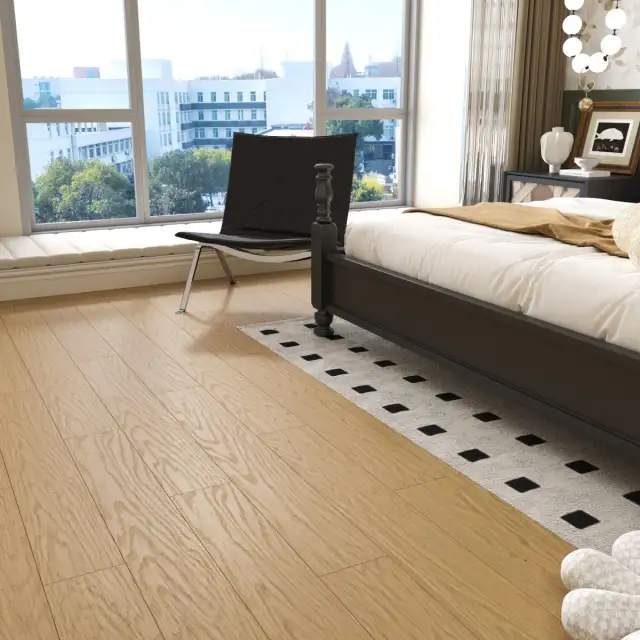

Laminate and luxury vinyl plank (LVP) get compared constantly because they solve a similar problem — realistic-looking wood-style flooring at a lower cost and easier installation than actual hardwood — but they're built from fundamentally different materials, and that difference shows up in exactly the situations where it matters most: water exposure, feel underfoot, and long-term durability.
What Each Material Actually Is
Laminate flooring is built from a high-density fiberboard core, topped with a printed image layer that mimics wood grain, and finished with a clear wear layer. It's a wood-derived product, which gives it a slightly firmer, more "authentic" wood-like feel underfoot, but also means it's vulnerable to moisture in a way a fully synthetic product isn't.
Luxury vinyl plank is made almost entirely from synthetic materials — a PVC or composite core, a printed vinyl layer, and a protective wear layer, often with an attached underlayment. Because it's not wood-based at its core, it handles moisture fundamentally differently than laminate, which is the single biggest practical distinction between the two products.
The Clearest Differentiator Between Two
This is where the two materials diverge most sharply. Laminate's fiberboard core will swell, warp, or delaminate if water sits on it for any meaningful length of time, even with a well-sealed top layer — a spill needs to be wiped up reasonably promptly, and laminate generally isn't recommended for full bathrooms, laundry rooms, or basements prone to moisture.
LVP's synthetic core is inherently water-resistant, and many products are rated fully waterproof, meaning standing water won't cause the core to swell or degrade. This makes LVP a common choice for bathrooms, kitchens, mudrooms, and basements — spaces where laminate carries real risk.
If water exposure is a realistic concern in the room you're flooring, this factor alone often settles the decision before anything else is considered.
Now To Feel and Sound Underfoot
Laminate tends to feel slightly firmer and, to many people, more like real hardwood underfoot, partly due to its rigid fiberboard core. It can also produce a slightly hollow or "clicky" sound when walked on, particularly with certain underlayment choices — though a quality underlayment reduces this noticeably.
LVP generally feels a bit softer and warmer underfoot, especially with an attached cushioned backing, and tends to be quieter when walked on. For homes with young kids, or anyone who spends a lot of time standing in a kitchen, that difference in comfort is often noticeable in daily use, not just in a showroom comparison.
Why More to Durability and New Wear Layer
Both products use a "wear layer" measured in mils to indicate scratch and dent resistance — a thicker wear layer generally means better resistance to daily wear, pet claws, and furniture legs, regardless of whether the underlying material is laminate or LVP.
Where they differ is in how they fail over the long term. Laminate's printed layer, once worn through, exposes the fiberboard core, which doesn't respond well to any subsequent moisture exposure. LVP's wear layer, once worn through, exposes the printed vinyl layer, which is more forgiving of moisture even after surface wear.
For high-traffic households, comparing the specific wear layer thickness between products matters more than the general laminate-versus-LVP category distinction, since a high-end laminate with a thick wear layer can outlast a low-end LVP product in scratch resistance, even though LVP wins on moisture resistance categorically.
Why Your Choice Matters - Cost Comparison
Pricing varies by product tier, but general patterns hold:
Laminate tends to run somewhat less expensive at the budget and mid-range tiers, though premium laminate products can approach LVP pricing
LVP spans a wider price range, from budget options comparable to mid-tier laminate up to premium products that approach the cost of engineered hardwood
Installation costs are often comparable between the two, since both are commonly sold as floating floor systems that don't require nailing or extensive subfloor prep, though rigid-core LVP (sometimes marketed as SPC) can be slightly more involved to install than standard click-lock laminate.
Why Laminate Is Gaining Ground in 2026
A real shift in the flooring market has laminate regaining share it lost to LVP over the past several years, driven largely by improvements in laminate's realism and durability. Modern high-end laminate now offers considerably more convincing wood-grain texture and embossing than older generations of the product, closing much of the visual gap that used to favor LVP by default. For rooms without significant water exposure — bedrooms, living rooms, hallways — laminate's slightly firmer, more wood-like feel is winning back buyers who want that specific quality underfoot.
Which One Should You Choose?
Choose LVP if: the room has any real water exposure risk (kitchens, bathrooms, basements, mudrooms), you want a warmer, quieter feel underfoot, or you're flooring a rental property where moisture resilience reduces long-term maintenance risk.
Choose laminate if: the room is a low-moisture space (bedrooms, living rooms, dining rooms, hallways), you prioritize a firmer, more traditional wood-like feel, or you're working with a tighter budget at the mid-range tier where laminate often costs somewhat less for comparable visual quality.
Consider a mixed approach: many homeowners choose LVP for kitchens, bathrooms, and entryways, and laminate for bedrooms and living spaces, matching each material to the room's actual moisture exposure rather than flooring the whole home in one product.
Why You Should Effectively Plan to Purchase
Whichever material you land on, the quantity math is identical — square footage of the room, adjusted by a waste factor for cuts and layout pattern. A Flooring Calculator handles that calculation for either product once you've settled on a direction, factoring in your chosen layout style to estimate total square footage and box count.
Frequently Asked Questions
Is LVP actually waterproof, or just water-resistant?
Many LVP products are marketed as fully waterproof, meaning the core won't swell or degrade from standing water, though seams and edges still need proper installation to prevent water from reaching the subfloor underneath.
Can laminate be installed in a bathroom if it's a fully sealed, high-quality product?
It's generally not recommended, even with premium products, because the fiberboard core remains vulnerable to any water that finds its way past seams or edges over time — a risk that's simply higher in bathrooms than other rooms.
Which flooring lasts longer, laminate or LVP?
It depends more on wear layer thickness and moisture exposure than the category itself. In dry rooms, a high-quality laminate can last as long as a comparable LVP product; in moisture-prone rooms, LVP has a clear durability advantage.
Does laminate or LVP feel more like real hardwood?
Laminate is generally considered slightly closer to hardwood in feel and firmness underfoot, due to its rigid wood-fiber core, while LVP tends to feel softer and warmer.
Is LVP more expensive than laminate?
It varies by tier — budget LVP and budget laminate are often similarly priced, but premium LVP products can cost more than premium laminate, particularly rigid-core waterproof options.
Can I install LVP or laminate over existing tile?
Both can often be installed over existing hard flooring as a floating floor, provided the surface is flat, clean, and structurally sound, though it's worth confirming the specific product's subfloor requirements first.
Do laminate and LVP require different underlayment?
Some LVP products come with an attached underlayment built into each plank, while laminate typically requires a separate underlayment layer installed first — always check the specific product's installation instructions.