
If you want to make your appartment look spacious and lively place, this article is for you. Most small-apartment storage advice repeats the same handful of tips — "use vertical space," "get an ottoman that opens up" — without addressing the actual problem, which is that small apartments run out of *specific kinds* of storage long before they run out of general square footage. You can have empty floor space and still have nowhere to put a vacuum, extra bedding, or a box of winter clothes. The fix isn't more furniture; it's matching the storage solution to the specific thing you're struggling to store.
Start by Identifying What's Actually Overflowing
Before buying any storage product, walk through the apartment and note specifically what doesn't have a home — not "I need more storage" generally, but "I have nowhere for cleaning supplies," or "off-season clothes are piling up in a suitcase." Generic storage furniture solves generic problems; it doesn't solve the specific bottleneck that's actually making the apartment feel cluttered.
Create Vertical Space
Everyone's heard "use your walls," but most small apartments still underuse vertical space in a few specific ways:
Above door frames. The space above a door is almost always empty and can hold a slim shelf for rarely used items — extra linens, seasonal decor, or luggage.
Inside closet doors. An over-the-door organizer isn't just for shoes; it works for cleaning supplies, cutting boards, or small tools that otherwise clutter a cabinet.
Between the top of tall furniture and the ceiling. A bookshelf or wardrobe rarely reaches the ceiling — that gap can hold labeled bins for items you access only seasonally.
Pegboards in kitchens or entryways. Beyond the farmhouse-kitchen look they're associated with, pegboards let you store items at exactly the height and spacing you need, which fixed shelving can't match.
Use Furniture With Dual Jobs
The most space-efficient furniture isn't necessarily the smallest — it's the piece that eliminates the need for a second piece of furniture entirely:
A bed frame with drawer storage underneath replaces a dresser, or at least significantly reduces how much dresser space you need.
A dining table that extends or folds handles both daily meals and occasional guests without needing a separate large table taking up permanent floor space.
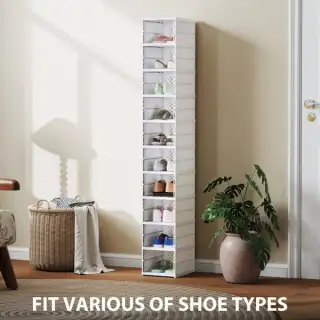
An entryway bench with storage inside replaces both a shoe rack and a place to sit while putting shoes on.
A coffee table with a lower shelf or lift top holds blankets, remotes, or board games that would otherwise clutter a side table drawer.
The key distinction from a purely decorative multi-purpose piece is whether the storage inside is actually large enough and accessible enough to use daily — a storage ottoman with a lid that's hard to open under a coffee table rarely gets used in practice.
Kitchen-Specific Storage ideas
Kitchens in small apartments run out of storage faster than any other room, mostly because appliances and cookware don't compress the way clothing does.
Magnetic strips for knives free up an entire drawer that would otherwise hold a bulky knife block.
Stackable, uniform food storage containers take up meaningfully less cabinet space than a mismatched collection of different-shaped containers.
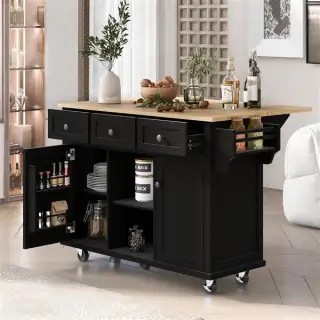
A rolling cart that fits in a narrow gap (next to a fridge, for example) adds counter and storage space that doesn't exist in a fixed layout.
Hooks under cabinets for mugs or utensils use dead space that's otherwise completely wasted.
Finest Closets: Rethinking the Default Layout
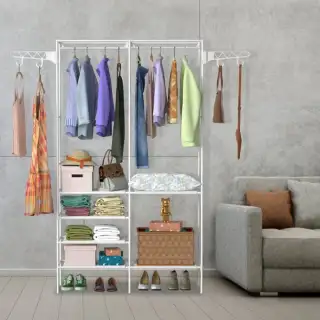
Most closets come with a single rod and one shelf, which is a deeply inefficient use of the space for anyone without a wardrobe of exclusively long dresses.
Add a second, lower rod for shirts, folded pants, or shorter items, roughly doubling hanging capacity in the same footprint.
Use slim, matching hangers instead of a mixed collection of bulky ones — this alone can meaningfully increase how much fits on a single rod.
Install shelf dividers to stop stacked sweaters or bags from toppling into a single messy pile.
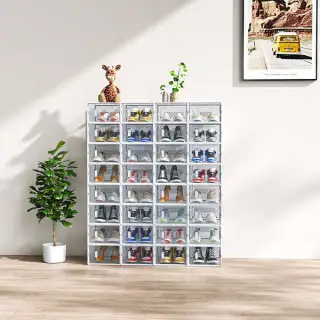
Use the floor of the closet deliberately, with stackable bins rather than a loose pile of shoes and bags.
Move to Off-Season and Infrequently Used Item Storage
The category that causes the most frustration in small apartments is the stuff you need only occasionally — winter coats in summer, holiday decorations, luggage. A few approaches that work better than "shove it in the closet":
Under-bed storage bins, specifically flat, low-profile ones designed for the space under a bed frame, hold considerably more than most people assume
Vacuum-sealed bags for soft items like out-of-season clothing and bedding, which can reduce their volume dramatically for storage
A small external storage unit, if the apartment genuinely has no more internal capacity for large or bulky seasonal items — sports equipment, holiday decorations, or furniture during a temporary living situation
Genuinely Resolving a Space Problem - You Have Organized Well
Sometimes the honest answer isn't a smarter shelf — it's that the apartment doesn't have room for everything currently being kept. A Storage Space Calculator can help figure out whether a small external storage unit makes sense for specific overflow items (seasonal gear, a bike collection, keepsakes) rather than trying to force everything into an apartment that wasn't built to hold it. This is often more cost-effective and less stressful than buying increasingly specialized furniture to compress everything into the existing floor plan.
A Realistic Start - A Cheerful Decision
Rather than trying every idea above at once, tackle the single most overflowing category first — whether that's kitchen storage, off-season clothing, or general clutter without a home — and solve that specific bottleneck before moving to the next. Small apartments respond better to targeted fixes than to a wholesale reorganization attempted in one weekend.
Frequently Asked Questions
What's the most underused storage space in a small apartment?
The vertical gap between tall furniture and the ceiling, and the space above door frames, are both consistently underused even in otherwise well-organized apartments.
Are storage ottomans actually useful, or just a gimmick?
They're useful when the lid opens easily and the interior space is genuinely large enough for what you're storing — they're less useful as a purely decorative afterthought with a shallow interior.
Should I buy more storage furniture or get rid of belongings first?
Generally, address the amount of stuff before buying new storage furniture. Adding more storage capacity to house items you don't actually need often just delays a decluttering decision rather than solving the underlying space problem.
Is vacuum-sealing clothes actually effective for saving space?
Yes, for soft goods like out-of-season clothing, bedding, and pillows, vacuum sealing can meaningfully reduce their storage footprint, though it's not suitable for structured items like coats with padding or shoulder shape.
When does it make sense to rent external storage instead of maximizing apartment space?
When specific bulky items — sports equipment, seasonal decorations, furniture during a transition — have no reasonable home in the apartment regardless of organizational effort, an external unit is often more practical than continuing to buy specialized furniture.
What's a quick win for someone overwhelmed by small-apartment clutter?
Pick the single most cluttered surface or drawer and solve just that one spot completely before moving to the next area — tackling the whole apartment at once tends to stall out.
Do closet organizing systems actually make a meaningful difference?
Yes, particularly adding a second rod or shelf dividers, since most closets come from the builder with a single inefficient rod-and-shelf layout that wastes a significant portion of the available space.