
Understanding Shower Drain Blockage Causes
Shower drains accumulate debris from multiple sources every time you bathe. Hair is the most visible culprit, but it rarely clogs drains alone. The real problem develops when hair combines with other materials. Skin cells shed naturally during showering and stick to wet surfaces. Soap scum and soap residue from your cleanser coat the drain walls and pipes. Shampoo residue and residual oils from hair products create a sticky film that traps other particles. Over time, grime and dirt from your body accumulate in these sticky layers, creating an ideal environment for blockage formation.
The composition of your water also plays a significant role in blockage formation. If you have hard water minerals in your supply, calcium and limescale deposits build up on pipe surfaces. This mineral buildup over time narrows the available space inside your pipes. Meanwhile, loose hair begins to tangle into hair matting and matted strands, forming dense clumps that catch other debris. These sticky deposits from soap and oils cause debris trapping, where particles that would normally wash away instead stick to the pipe walls. The combination of residue combination creates a progressive problem that worsens gradually.
As this accumulation continues, the consequences become increasingly serious. Pipe narrowing and pipe openings narrowing restrict how much water can flow through. You'll notice a slow drain where water takes longer to empty, or standing water that pools in your shower. The trapped debris begins to decompose, producing unpleasant odors that rise from the drain. Beyond the inconvenience, prolonged clog accumulation and buildup restriction can create water flow obstruction and water flow restriction severe enough to cause water damage risk to your bathroom structure if water backs up or overflows.
Preventative Drain Maintenance Strategies
The most effective approach to maintaining a clear shower drain starts with physical barriers that stop debris before it enters your pipes. A mesh hair catcher or silicone hair catcher placed over your drain opening intercepts hair and larger particles at the surface. These simple devices provide debris interception that prevents the initial accumulation of material. A drain cover serves a similar function while allowing water to flow freely. Installing one of these solutions creates the first line of defense in your clog prevention strategy. The key is choosing a barrier that fits your drain opening securely and removing collected debris regularly so the barrier itself doesn't become clogged.
Establishing a consistent regular cleaning routine forms the backbone of effective drain upkeep. A weekly schedule works well for most households, involving a simple hot water rinsing to flush away loose debris and help with soap residue dissolution and oil dissolution. During weekly maintenance, pour boiling hot water down the drain slowly to allow it to break down accumulated residues. Monthly maintenance should include trap cleaning and emptying if your drain has an accessible trap, plus application of eco-friendly cleaning products made with plant-based ingredients that support buildup prevention without harsh chemicals. A quarterly deep cleaning addresses deeper deposit removal and pipe clearing to prevent minor issues from becoming serious problems. This tiered approach to preventative maintenance catches problems early and reduces the need for costly plumbing repairs avoidance by addressing issues before they require professional intervention.
Eco-friendly cleaning products with plant-based ingredients offer effective product application without the environmental impact of chemical drain cleaners. These gentler formulations work through natural enzymatic action to break down soap residue, oil dissolution, and organic matter without damaging your pipes. When combined with hot water treatments, they provide reliable pipe clearing and cost prevention by maintaining drain health over time. The advantage of this preventative approach is that consistent drain upkeep through regular intervals—weekly, monthly, and quarterly—keeps your drain functioning properly and helps you avoid the expense and inconvenience of costly plumbing repairs avoidance.
Natural Cleaning Methods and Solutions
A natural cleaning solution offers an effective chemical-free method for maintaining your shower drain without relying on harsh commercial products. Unlike conventional bathroom cleaner formulations, an eco-friendly approach uses ingredients already in your home to dissolve buildup and eliminate odors. Plant-based products and plant-based ingredients work similarly to traditional drain treatments, but they break down naturally in your plumbing system and the environment. Many homeowners are surprised to learn that the same biodegradable products and biodegradable formulations used for general household cleaning can address drain problems effectively. This shift toward gentler solutions protects both your pipes and the ecosystem while delivering results comparable to chemical alternatives.
The combination of half cup baking soda and half cup white vinegar creates a powerful chemical reaction that tackles common drain issues. Begin by pouring the half cup baking soda directly down your drain, followed by the half cup white vinegar. The baking soda and vinegar reaction produces a vigorous fizzing reaction and bubbling action that dislodges trapped debris. This fizzing and bubbling action works through mechanical agitation rather than toxic fumes, making it safe for your family. The chemical reaction initiates organic matter breakdown, deposit breakdown, grime dissolution, limescale dissolution, and soap scum breakdown while supporting mineral deposit removal and deodorization. Allow this mixture to work for 15 minutes to 30 minutes depending on the severity of buildup, then flush thoroughly with hot water. This method is twice as effective when you use boiling hot water for the final flush, as the heat enhances the breakdown process.
Natural methods provide significant safety and compatibility advantages that chemical drain cleaners cannot match. A chemical-free method ensures pipe safety and plumbing compatibility since baking soda and vinegar won't corrode metal or damage PVC pipes. Your approach supports environmental protection by avoiding toxic runoff, while also ensuring family safety, pet safety, and child safety by eliminating exposure to caustic substances. The skin-gentle formulation of this natural cleaning solution means you can handle the materials without protective gloves or fear of chemical burns. Beyond drain cleaning, this eco-friendly approach offers multiple surface compatibility, allowing you to use the same ingredients throughout your bathroom for consistent, safe cleaning. For stubborn situations, you can increase the amount to one cup white vinegar for enhanced product application, adjusting your soaking period to 30 minutes or longer before flushing with hot water.
Physical Blockage Removal Techniques
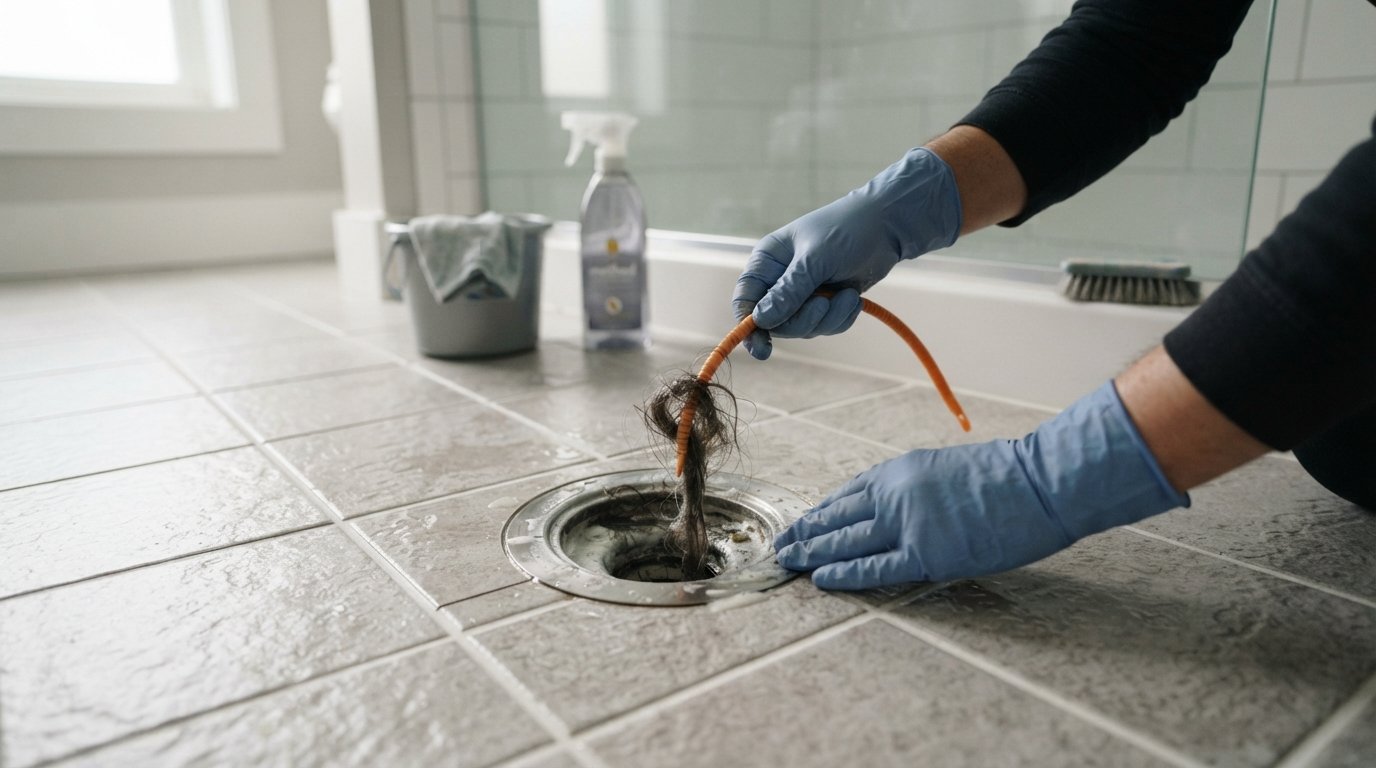
When water begins to pool in your shower or drains slowly, physical blockage removal techniques offer the most direct solution. Start by removing the drain cover to access the clogged area. Once the drain cover removal is complete, you gain pipe access to address the problem. Look for visible surface-level clogs and hair clumps that sit near the opening. Using your fingers or a simple tool, you can perform manual extraction of this accessible debris. Pull out hair clumps and other visible material through hair pulling and debris extraction. This initial physical removal often eliminates the immediate problem, though you must exercise caution against debris pushing deeper into the pipe, which could lead to clog worsening prevention by avoiding downward pressure that forces material further down.
For debris that sits just beyond your reach, specific tools make debris clearance much easier. Tweezers work well for pulling individual strands and small particles from the drain opening. Needle-nose pliers provide better grip and reach for extracting hair clumps and tangled material. A screwdriver can help dislodge stubborn buildup and support gunk removal by gently breaking apart compacted deposits. For deep clog reaching and blockage dislodgment, a manual drain snake or standard drain snake proves invaluable. This flexible tool slides down the pipe to locate and break apart clogs that manual tools cannot reach. Feed the drain snake slowly into the drain, rotating it gently to catch debris and perform blockage pulling. When you feel resistance, you have likely found the clog—continue rotating to dislodge it. For more severe situations, an auger or electric drain snake provides mechanical power that manually operated tools cannot match, making clog removal faster and more thorough for deeply embedded blockages.
After physical debris extraction and blockage pulling complete the initial clearing, flushing removes residual material and prepares the drain for long-term maintenance. Pour boiling water down the drain in stages, allowing it to flow through and carry away loosened debris. The heat from boiling water flushing helps dissolve remaining buildup and supports residue clearing of soap films and oils. Follow the boiling water treatment with regular hot water rinses to complete the residue clearing process. This final step washes away particles dislodged during physical removal and ensures your drain flows freely. The combination of physical removal, tool-assisted blockage dislodgment, and thorough flushing addresses both visible clogs and the underlying buildup that contributes to recurring drainage problems.
Boiling Water Treatment Method
Thermal energy application works by dissolving the materials that accumulate in your shower drain over time. When you apply hot water, the thermal dissolution process breaks down soap scum and accumulated residue that cling to pipe walls. The heat penetrates these sticky deposits and softens them, making soap scum breakdown possible without scrubbing or chemical intervention. This heat-based clearing method is particularly effective because soap scum and oils have lower melting points than the temperature of boiling water, allowing the heat to dissolve what would otherwise remain stuck in place. The thermal energy application also helps with clog dissolution by softening the materials that bind debris together, making it easier for water to carry particles away.
The application process requires careful technique to maximize effectiveness. Begin by removing any drain cover or strainer to ensure direct pipe flow of the water. Slowly pour boiling hot water down the drain using careful pouring to avoid splashing and ensure the water reaches deep into the pipe rather than running off the surface. The gradual application allows the thermal energy application to work on the buildup as the water moves through, rather than rushing past too quickly. Pour in stages if needed, allowing each application to work before adding more. This technique ensures pipe flushing occurs effectively and gives the heat time to break down deposits along the entire drain path.
Minor clogs and minor blockage effectiveness represent the primary strength of this approach. The boiling hot water treatment works best on partial blockages caused by soap scum buildup and grease accumulation rather than dense hair matting or severe obstructions. For best results with minor clogs, use repetitive application by performing this treatment multiple times over several days. Many people find that applying boiling hot water several times throughout the week provides better results than a single treatment. This multiple rounds strategy allows residue working through gradually, with each application dissolving more accumulated residue breakdown than the previous one. The simple method becomes an effective approach when used consistently as part of your regular maintenance routine rather than as a one-time fix for severe blockages.
Plunger-Based Drain Clearing
A plunger offers a straightforward mechanical solution for clearing shower drain clogs without requiring chemical products or professional assistance. Success with this method depends heavily on achieving the right conditions before you begin plunging. Start by ensuring partial water filling in your shower basin—you need enough water filling to cover the plunger cup completely, but not so much that water overflows when you apply pressure. This water creates the foundation for effective pressure generation. Position your plunger directly over the drain opening, ensuring the cup sits flat and centered. Proper plunger positioning is essential because any gap between the cup and the drain surface will break the seal and eliminate your ability to generate the necessary force. Press down firmly to create a tight seal requirement that allows pressure to build inside the pipe rather than escaping around the edges. Take a moment to verify seal creation by gently pulling up slightly—if water rushes in around the cup, your seal is incomplete and you need to reposition and press down harder to achieve the tight seal requirement needed for effective clearing.
Once you have established your tight seal requirement, the pressure-based clearing technique involves rhythmic pushing and pulling motions that generate force transmission through the water column into your drain. Begin by pushing down firmly on the plunger handle, driving the cup downward to compress the air and water trapped beneath it. This downward motion creates pressure generation that travels through the pipe toward the clog obstruction. The force application should be deliberate and controlled rather than frantic. After pushing down, pull up quickly while maintaining seal maintenance to create a suction effect. This suction technique reverses the pressure and can help dislodge material from the pipe walls. The combination of pushing and pulling creates alternating pressure waves that work toward mechanical dislodgment of the blockage. Maintain a steady rhythm maintenance as you perform repetitive plunging, typically working for 15 to 20 seconds before pausing to check your progress. The consistent, rhythmic motion is more effective than random or aggressive plunging because it allows pressure to build and release in a controlled manner.
When you encounter a persistent clog handling situation where initial plunging doesn't clear the drain, adjust your approach rather than abandoning the method. Continue with repetitive plunging for several times in succession, as obstruction dislodgment sometimes requires sustained effort to break apart compacted material. Between plunging cycles, add more water if needed to maintain adequate water filling for pressure transmission. You can also try varying your technique by using shorter, quicker strokes followed by longer, slower pulls to create different pressure patterns that may work better on your specific clog obstruction. If the clog remains after several times of thorough plunging, it likely extends deeper into the pipe than plunger force can reach, indicating that you should transition to other methods like a drain snake or professional assistance. The key to successful persistent clog handling is recognizing when plunging has reached its effectiveness limit rather than continuing indefinitely with diminishing results.
Chemical Drain Cleaner Considerations
Chemical drain cleaners represent a powerful but potentially dangerous option for addressing stubborn shower drain clogs. These products contain a harsh formulation designed to dissolve blockages through aggressive chemical action rather than mechanical force. The chemical formulations typically rely on either caustic alkaline compounds or acidic solutions that eat away at accumulated debris, soap scum, and organic matter. Understanding how these products work is essential before considering their use, as the same chemical reaction that breaks down clogs can also damage your plumbing system and pose serious safety risks to you and your household.
Safety must be your primary concern when considering chemical treatment of your drain. Chemical drain cleaners produce toxic fumes that can cause respiratory irritation, eye damage, and chemical burns if they contact your skin or eyes. The harsh formulation of these products means you must follow all safety precautions during product application, including wearing protective gloves, eye protection, and ensuring adequate ventilation. Instruction following and strict product instruction compliance are not optional—they are essential requirements for safe use. Never deviate from the manufacturer's directions, and absolutely observe the cleaner mixing avoidance and cleaner mixing prohibition warnings. Mixing chemical drain cleaners with other cleaning products, even seemingly harmless ones, can create dangerous gas combinations that pose life-threatening risks. Incorrect usage risks extend beyond personal injury to include significant damage to your home's plumbing infrastructure.
The structural damage potential of chemical drain cleaners makes them particularly problematic for older plumbing systems. The harsh formulation can cause pipe damage risk by corroding metal pipes or degrading PVC materials over time. Repeated use accelerates this deterioration, potentially leading to leaks and costly repairs. Beyond the pipes themselves, fixture damage risk affects your shower fixtures, drains, and surrounding fixtures that come into contact with chemical residue. Even brief contact with concentrated chemical formulations can discolor, pit, or permanently damage chrome, brass, and other fixture materials. The pipe damage risk and fixture damage risk mean that using chemical drain cleaners today may create plumbing problems that cost far more to repair than the original clog would have cost to address through safer methods.
Chemical drain cleaners should be considered a caution-required method and a caution advised approach that you reserve for only the most severe situations. Position these products as your last resort approach after you have exhausted safer alternatives like physical removal, plungers, drain snakes, natural solutions, and professional plumbing assistance. The combination of personal safety risks, household hazard concerns, environmental impact, and potential damage to your plumbing system makes chemical drain cleaners an option to avoid whenever possible. If you do determine that chemical treatment represents your only remaining option, ensure you have thoroughly read all safety information, understand the incorrect usage risks, and can commit to strict product instruction compliance throughout the entire product application process.
Initial Assessment and Safety Protocols
Before you attempt to clear your shower drain, take time to understand what you are dealing with through a thorough clog assessment. Begin by observing how your drain behaves—does water drain slowly, or does it back up completely? This initial observation helps with problem evaluation and severity determination. Next, perform a clog localization assessment to determine whether the issue is confined to your shower or extends throughout your home. Run water in other sinks, toilets, and tubs to see if they drain normally. If only your shower drain is affected, you have a localized versus widespread clog situation that suggests the blockage sits within the shower drain line itself. However, if multiple fixtures drain slowly or back up, you are observing a widespread issue identification with multi-drain impact evaluation that indicates a problem deeper in your home drainage system. This drainage system diagnosis is crucial because it determines which solutions will work and when you need professional help. A larger issue indication such as multiple drains failing simultaneously suggests a main line blockage or septic system problem that requires professional attention rather than DIY methods.
Safety prioritization must come before any cleaning attempt, as several hazard prevention measures protect you during the process. Establish protective measures by gathering appropriate personal protection equipment before you begin. Wear glove wearing to protect your hands from debris, bacteria, and any cleaning products you might use. Add goggle wearing to shield your eyes from splashing water or accidental chemical exposure. Ensure bathroom ventilation by opening windows and running exhaust fans before you start work. This ventilation ensuring step is particularly important if you plan to use any cleaning products, as many can produce potentially harmful fumes that accumulate in enclosed spaces. Fume prevention through proper air circulation protects your respiratory system and prevents dizziness or nausea during your work. The bathroom ventilation importance cannot be overstated—adequate airflow makes the entire process safer and more comfortable.
A thorough inspection requirement helps you determine when your situation exceeds what you can safely handle yourself. Examine the area around your drain for signs of water damage, soft spots in flooring, or persistent moisture that suggests a deeper problem. Listen for unusual sounds from your plumbing when water drains, as gurgling or bubbling can indicate issues beyond simple clogs. If you notice foul odors that persist despite cleaning attempts, or if water backs up into other fixtures when you try to clear the drain, these are larger issue indication signs that warrant professional consultation need. Additionally, if your home has older plumbing, cast iron pipes, or a septic system, professional consultation need becomes more important before attempting aggressive clearing methods that could damage these systems. A plumber can perform a drainage system diagnosis using cameras and specialized equipment to identify exactly where blockages sit and whether your home drainage system has structural issues. Recognizing the limits of DIY approaches and knowing when to call a professional prevents costly damage and ensures your plumbing receives appropriate care.
Professional Plumbing Intervention
A professional plumber brings diagnostic capabilities that go far beyond what DIY methods can achieve. When you contact a licensed plumber, you gain access to someone with specialized expertise developed through years of training and field experience. An experienced plumber performs a thorough inspection of your drain system using equipment and knowledge that reveal problems invisible to the untrained eye. This diagnostic capability allows for accurate root cause identification rather than simply treating surface symptoms. A professional plumber can determine whether your clog stems from hair matting, soap scum buildup, mineral buildup over time, or structural issues within your pipes. This underlying cause diagnosis is essential because addressing only the visible blockage while ignoring the root cause determination means the problem returns within weeks or months. Expert consultation ensures you understand not just what is wrong, but why it happened and how to prevent recurrence.
Professional intervention provides access to advanced tools and advanced techniques that handle situations beyond DIY capability. A licensed plumber uses video inspection cameras to see inside your pipes without excavation, identifying blockage location and severity with precision. Advanced plumbing tools like motorized drain augers, hydro-jetting equipment, and specialized snake designs deliver advanced technique application that mechanical plungers and manual snakes cannot match. These advanced tools can clear complex plumbing issues including deeply embedded clogs, persistent clog situations, and blockages caused by tree roots or pipe damage. The complex problem handling capability of professional equipment means that situations requiring hours of manual effort can be resolved in minutes. Plumbing services from a qualified professional provide solution implementation that addresses your immediate problem while preventing future issues through proper additional problem prevention measures.
The benefits of professional intervention extend beyond immediate clog removal to include long-lasting solution delivery and fully functional drain restoration. When a professional plumber completes their work, you receive clog-free result assurance backed by their expertise and often by warranty guarantees. An experienced plumber doesn't simply clear the current blockage—they address underlying conditions that contributed to the problem, such as improper pipe slope, deteriorating pipe materials, or design flaws that promote recurring clogs. This comprehensive approach to complex plumbing issues means you avoid the frustration of repeated blockages that plague DIY solutions. Plumbing services provide peace of mind that your drain will function reliably, and if problems do recur, you have professional recourse rather than being left to troubleshoot alone. For persistent clog situations that resist your best efforts, or when you discover that your problem involves plumbing issues beyond simple blockage, professional intervention becomes not just helpful but necessary to protect your home and restore proper drainage function.