

You've probably stood in the middle of a half-unpacked apartment, or a living room mid-renovation, trying to figure out why a space that should feel good just doesn't. It's rarely about money. It's usually about a handful of decisions — layout, light, color, materials — made without a framework to guide them. The principles below aren't decoration trends. They're the working logic that professional designers use, along with the trade-offs nobody mentions when they hand you the highlight reel.
1. Start With Function, Not Furniture
The most common mistake in modern interior design is choosing furniture before deciding how the room needs to work. Before buying anything, map out what actually happens in the space: Is the living room also a home office three days a week? Does the entryway need to hold coats, shoes, and mail, or just look nice for five seconds when guests arrive?
Functional design means every element earns its place. A coffee table with hidden storage beats a purely decorative one in a small apartment. A bench with a drawer underneath does double duty. This isn't about being spartan — it's about refusing to let form dictate a layout that doesn't serve how you live.
Trade-off: Function-first design can feel less "curated" at first, especially compared to styled showroom photos. That gap closes once you add the finishing layer (rugs, art, lighting) — but it does mean resisting the urge to buy the pretty thing before the useful thing.
2. Practice Editing, Not Just Minimalism
"Minimalist interior design" gets flattened into "own less stuff," which misses the actual skill: editing. A minimalist room isn't empty — it's curated so each object has room to be seen. The practical version of this: for every surface (shelf, console, mantle), limit yourself to three visual groupings, not three total objects. A grouping might be a lamp, a stack of books, and one plant.
Where this trips people up: Minimalism looks cheap to start (fewer purchases) and gets expensive to maintain, because with less visual noise, every flaw — a scuffed wall, mismatched hardware — becomes more noticeable. If you're not ready to fix small imperfections, a busier, more layered room actually hides more.
3. Use the 60-30-10 Rule for Color, Then Break It Once
A neutral color palette is the backbone of most modern spaces — but "neutral" doesn't mean beige everything. The reliable framework is the 60-30-10 split: 60% dominant color (usually walls and large surfaces), 30% secondary color (major furniture), and 10% accent (pillows, art, a single bold chair).
For a small apartment, keeping the 60% consistent across rooms — say, a warm greige — makes the whole space feel larger because the eye doesn't hit visual "stops" at doorways. The 10% accent is where you can commit to something specific: deep terracotta, forest green, or navy, rather than another neutral. A room using only neutrals at every tier tends to read as unfinished rather than calm.
Note: exact paint shades and current color-of-the-year picks shift yearly and by region — check current swatches from a supplier before committing, since undertones look different under LED vs. natural light.
4. Design Around Natural Light, Not Around Furniture Placement First
Natural light should shape your layout decisions before furniture does. A common error: placing a sofa where it "looks right" on paper, only to realize it blocks the main light source for most of the day.
Practical natural light tips: mirrors placed perpendicular to (not directly across from) a window bounce light sideways into a room rather than back outside. Sheer curtains diffuse harsh afternoon light without blocking it entirely — useful for west-facing rooms that get glare in the evening. If a room only gets light from one direction, avoid dark, saturated wall colors on the wall opposite the window; they absorb what little bounce light exists.
Trade-off worth naming: Maximizing natural light (fewer heavy drapes, lighter colors) often means less privacy, especially at street level or in dense neighborhoods. Frosted window film or higher sheer layering is a middle ground, not a compromise you should feel bad about.
5. Mix Textures Deliberately, Not Randomly
Texture is what keeps an all-neutral room from feeling flat. The workable rule: aim for at least three different textures in any seating area — for example, a smooth leather sofa, a nubby wool throw, and a woven jute rug. Mixing textures in interior design fails when everything is the same finish family (all matte, all shiny, all soft), which reads as monotonous even with varied colors.
A practical test: stand in the doorway and look at the room in black and white (your phone camera has a filter for this). If it looks flat and undefined without color, texture is likely missing, not color.
6. Treat Open-Concept Layouts as a Trade, Not an Upgrade
Open-concept home design ideas dominate renovation shows, but open concept isn't universally better — it's a different set of trade-offs. You gain sightlines, natural light distribution, and a sense of larger space. You lose sound separation (a TV or dishwasher running affects the whole zone), cooking smells traveling into living areas, and the ability to hide mess in one room while entertaining in another.
For renovators: knocking down a wall is often less about the wall itself and more about what's inside it — plumbing, HVAC ducts, or load-bearing structure. This is genuinely something to verify with a licensed contractor or structural engineer before budgeting, since the cost difference between removing a non-structural partition and a load-bearing wall (which needs a support beam) can be substantial and varies heavily by region and house age.
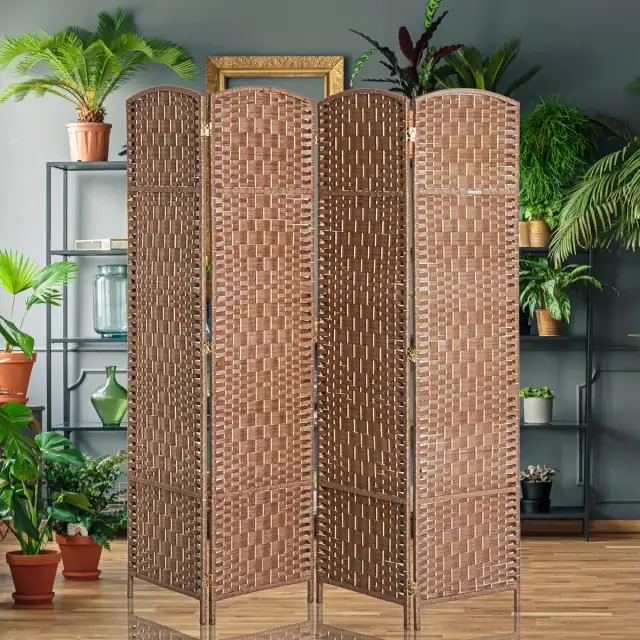
If you rent or aren't ready for structural changes, you can simulate openness with sightline tricks: same flooring throughout, consistent trim height, and furniture under 30 inches tall used as soft dividers instead of walls.
7. Choose Sustainable Materials for Durability First, Ethics Second
Sustainable interior design materials get marketed almost entirely on environmental grounds, but the practical case is durability and air quality — reasons that matter regardless of your priorities. Solid wood, reclaimed wood, and bamboo generally outlast particleboard-based furniture, which matters more in small apartments where furniture gets moved and reused across multiple homes.
Low-VOC or zero-VOC paint is worth specifying regardless of the sustainability angle — it reduces off-gassing smell and is genuinely easier to live with in freshly painted rooms, especially with limited ventilation. The trade-off: sustainable materials often cost more upfront (reclaimed wood furniture, for instance, is rarely the cheapest option in a showroom) but tend to need replacing less often, which changes the real cost picture over five to ten years rather than at checkout.
Exact price premiums vary widely by supplier and region — get current quotes rather than relying on general cost claims.
8. Design the Living Room Around One Anchor, Not Symmetry
Learning how to design a modern living room often starts with symmetry advice (matching side tables, mirrored lamps), but symmetry isn't required for a room to feel resolved — an anchor is. Pick one dominant piece (a sectional, a fireplace, a large piece of art) and arrange everything else in relation to it, rather than trying to balance every element equally.
For layout: keep primary walking paths at least 30 inches wide, and float furniture away from walls when the room allows it — pushing every piece against a wall is a small-apartment habit that actually makes larger rooms feel emptier and less used.
9. Solve Small Spaces With Sightlines, Not Just Furniture Size
Modern interior design ideas for small spaces usually stop at "buy smaller furniture," which is only half the answer. The bigger lever is sightlines — what you see first when you walk in. A small apartment with a clear view straight through to a window feels larger than a bigger apartment where the first thing you see is a wall or the back of a couch.
Functional design for small apartments also means vertical storage (shelving to the ceiling, not stopping at eye level) and furniture that changes function — a daybed instead of a sofa plus a guest bed, for instance. Multi-purpose furniture is not a downgrade from "real" furniture; it's a deliberate choice that trades some specialization for saved square footage.
10. Treat Trends as Optional Layers, Not the Foundation
Interior design trends for 2026 — expect continued interest in curved furniture silhouettes, warmer neutral tones replacing stark grays, and more visible natural materials — are worth knowing, but they should sit on top of the nine principles above, not replace them. A trend-forward piece (a curved boucle chair, for example) works because the room around it already has good light, function, and proportion. The same piece in a poorly lit, poorly planned room won't fix the room; it'll just be an expensive object in it.
Budget-friendly approach: If you're renovating in phases, spend first on the things that are expensive to change later — layout, lighting fixtures, flooring — and treat trend pieces as the cheapest, most replaceable layer. This keeps the foundation timeless while letting the surface evolve.
Frequently Asked Questions
What is the difference between modern and minimalist interior design? Modern design refers to a broader style rooted in clean lines, function, and materials like glass and metal, often dating back to mid-20th-century design movements. Minimalism is a subset that specifically emphasizes reduced ornamentation and fewer objects. A room can be modern without being minimalist.
How do I make a small apartment look bigger without renovating? Prioritize sightlines (clear views to windows), consistent flooring, lighter wall colors, and vertical storage instead of floor-level clutter. Mirrors placed to reflect light or a view also help more than most furniture swaps.
Is open-concept living still popular in 2026? It remains common in new construction, but there's growing interest in "broken-plan" layouts — partial walls, level changes, or glass partitions that keep openness while restoring some sound and visual separation.
What is the 60-30-10 rule in interior design? It's a color-proportion guideline: 60% dominant color, 30% secondary color, 10% accent color, used to keep a room's palette balanced instead of either monotonous or chaotic.
Are sustainable materials more expensive? Often yes, upfront. Reclaimed wood, solid wood furniture, and low-VOC finishes tend to cost more at purchase but generally last longer, which can offset the initial premium over several years. Confirm current pricing with suppliers, since this varies by region and material availability.
How many colors should a modern room have? Most cohesive rooms use one dominant neutral, one secondary tone, and one accent color — roughly three total color families, with variation in shade within each.
What's the best flooring for an open-concept space? Consistent flooring throughout the open area (same material and color) is generally recommended to keep sightlines unbroken. The best specific material depends on foot traffic, moisture exposure, and budget — worth discussing with a flooring contractor for your specific layout.
Can renters apply modern design principles without permanent changes? Yes. Peel-and-stick materials, furniture-based room division, removable window film for light and privacy control, and area rugs to define zones all replicate structural design choices without altering the unit.
How do I mix textures without making a room look cluttered? Limit yourself to three to four distinct textures per seating area, and keep at least one large surface (a rug or a sofa) as a visual "resting point" that isn't heavily textured, so the eye has somewhere to land.