
Queen Bed Dimensions and Rug Extension Requirements
A standard queen bed measures 60 inches wide and 80 inches long, making it one of the most common mattress sizes in homes. An Olympic queen is wider at 66 inches, while a California queen is narrower but longer at 60 by 84 inches. Custom frames and platform beds can also create non-standard sizes, so measure your own bed before buying a rug. Even small differences in bed width and length change the bed footprint and how the rug should sit.
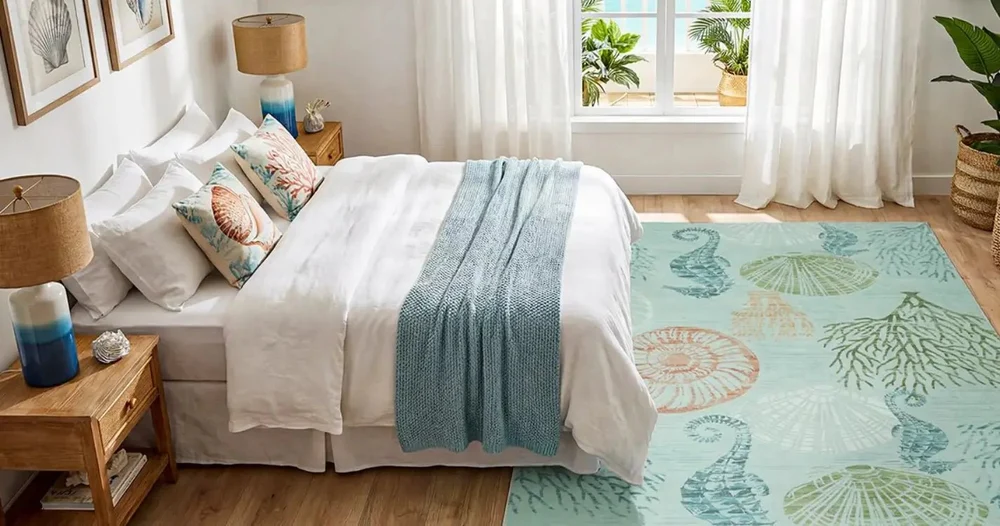
Rug extension is how far the rug reaches beyond the mattress edges. A practical guideline is 18 inches on each side, though many designers prefer 24 inches for a more generous look. For a standard queen bed, 18 inches of extension calls for a rug about 8 feet wide, while 24 inches calls for about 9 feet wide. These sizes create a soft landing, so your feet touch the rug rather than cold flooring when you step out of bed. The rug's length should run parallel to the bed's length.
Recommended Rug Sizes for Queen Beds
Choosing the right rug begins with your room size. A 3x5 or 4x6 rug suits tight rooms and small bedrooms, but it only offers a foot accent. A 5x7 or 5x8 rug fits standard rooms, and a 6x9 rug works in medium bedrooms with two-thirds coverage. A 7x10 rug is a reliable standard, an 8x10 rug suits large and master bedrooms, and a 9x12 rug gives three-quarters coverage in spacious suites. Beyond rectangles, an accent rug or runner adds a design accent at the foot of the bed, and a pair of rugs placed on either side balances larger spaces.
Rug Placement Methods Under and Around Queen Bed
Several placement strategies guide how a rug sits relative to the bed. Symmetrical placement centers the rug under the bed so the extension is even on all accessible sides, which creates a balanced look in most layouts. Perpendicular placement runs the rug across the foot of the bed and extends it equally on both sides, which works well when the bed faces the room's entrance. Asymmetrical placement offsets the rug to one side for a relaxed, intentional look, and foot-only placement keeps the rug beyond the foot of the bed. A runner along the sides suits narrow rooms.
Coverage level also matters. A rug fully under the bed creates strong visual anchoring, while a rug two-thirds under the bed leaves the remaining third beyond the foot. Starting the rug at the middle of the bed keeps the head end exposed, which suits a minimalist look. Whichever you choose, extend the rug about 18 inches beyond the sides so it frames the bed and nightstands as one unified group. Placing the rug in front of the nightstands defines the space without tucking it beneath the side tables.
Before committing, outline the rug on the floor with painter's tape. This shows how the rug's width and length relate to the bed, and it confirms that the rug will not overwhelm a narrow room.
Factors Influencing Rug Size Selection for Queen Beds
Start by measuring your room's total width and length, then confirm your exact bed dimensions. Measure the nightstands and other furniture, and note how much flooring stays visible and whether the room is a high-traffic area. In a small bedroom every inch matters, while a spacious room allows a more generous rug without clutter. A symmetrical layout feels formal and grounded, whereas an asymmetrical one adds visual interest in small spaces. These measurements help you choose a size that suits both your room and your design goals.
Wrong sizing has real consequences. An undersized rug makes the bed look isolated, while an oversized rug leaves too little walking space and makes a small room feel cramped. Matching the rug to your actual room and bed dimensions avoids both mistakes and keeps the result stylish within your budget.
Functional and Aesthetic Benefits of Bedroom Rugs
A rug under the queen bed softens hard flooring such as tile, wood, or laminate, which feels pleasant on early mornings. It also absorbs sound, adds warmth through insulation, and provides a comfortable soft landing. These qualities help allergy sufferers and pet owners who want less direct contact with bare flooring.
Visually, the rug anchors the bed and furniture, defines zones and pathways, and prevents a scattered look. Through color and pattern, it builds cohesion with your existing décor and acts as a polished finishing touch that makes the bedroom feel coordinated.
Rug Sizes to Avoid Under Queen Beds
Sizes such as 4x5, 5x6, and 6x7 are too small for a queen bed. They create a disproportionate relationship between the bed and the floor, get lost in the room, and fail to provide a soft landing at the sides. A round rug also struggles because its circular shape clashes with the rectangular bed and leaves awkward gaps, so a rectangular rug is the more practical choice.
Rug Material and Maintenance Considerations for Bedrooms
Natural fibers such as jute and sisal resist staining and wear well. Heavier textures are durable but can feel coarse underfoot, while lighter textures feel softer but wear sooner. Choose based on whether you value comfort or longevity. If you have pets, kids, or allergies, prioritize stain and fade resistance, and check whether the rug is machine washable. Natural fibers also need specific cleaning methods, so always follow the manufacturer's guidelines before washing.
A rug pad prevents slipping, protects your flooring, and makes repositioning and cleaning easier. Vacuum often, treat spills quickly, and rotate the rug regularly so wear spreads evenly. When matting, discoloration, or structural damage appears, replace the rug rather than repairing it endlessly.
Rug Style and Design Matching for Bedroom Aesthetics
Let your design theme lead the choice. A minimalist bedroom suits clean lines and neutral backgrounds, a bohemian scheme welcomes layered textures and fringe, and a natural organic style calls for jute or sisal. For color, start from your existing colorway: neutral tones are versatile, earth tones add warmth, and a pop of color can enliven a subdued palette. Choose patterns that complement rather than compete with your textiles and furniture.
Most Popular and Recommended Rug Sizes for Queen Beds
The most popular and recommended size for a queen bed is the 8x10 rug. It fits a queen bed with a nightstand on each side and extends 18 to 24 inches beyond the mattress edges. The common alternative is the 10x12 rug, which suits larger master bedrooms. Both sizes balance practical function with visual impact.
Room Size Categories and Corresponding Rug Recommendations
A small room of about 10' x 12', often a guest room, suits a 6' x 9' rug. Medium bedrooms of about 11' x 13' or 12' x 14' suit a 7' x 10' or 8' x 10' rug. Large rooms of 13' x 15' or more, including master suites and bedrooms with a sitting area, suit a 9' x 12' rug. A budget-friendly buyer can choose the 6' x 9', while those seeking luxury can choose the 9' x 12'. Always match the rug to your actual room dimensions, since the wrong size wastes money.