Desk & Chair Height Calculator
The right desk and chair height prevents sore shoulders, wrists and backs. Enter your height to get a starting point for your standing desk, sitting desk, chair and monitor, then fine-tune for comfort.
Result
—
Shop pieces that fit

How this calculator works
Your ideal desk height depends on where your elbows are. When you type, your elbows should be bent at about 90 degrees with your shoulders relaxed, and the desk surface should be about an inch below your elbows. The calculator estimates your elbow, knee and eye heights from your overall height using average body proportions, then adds the height of your shoes.
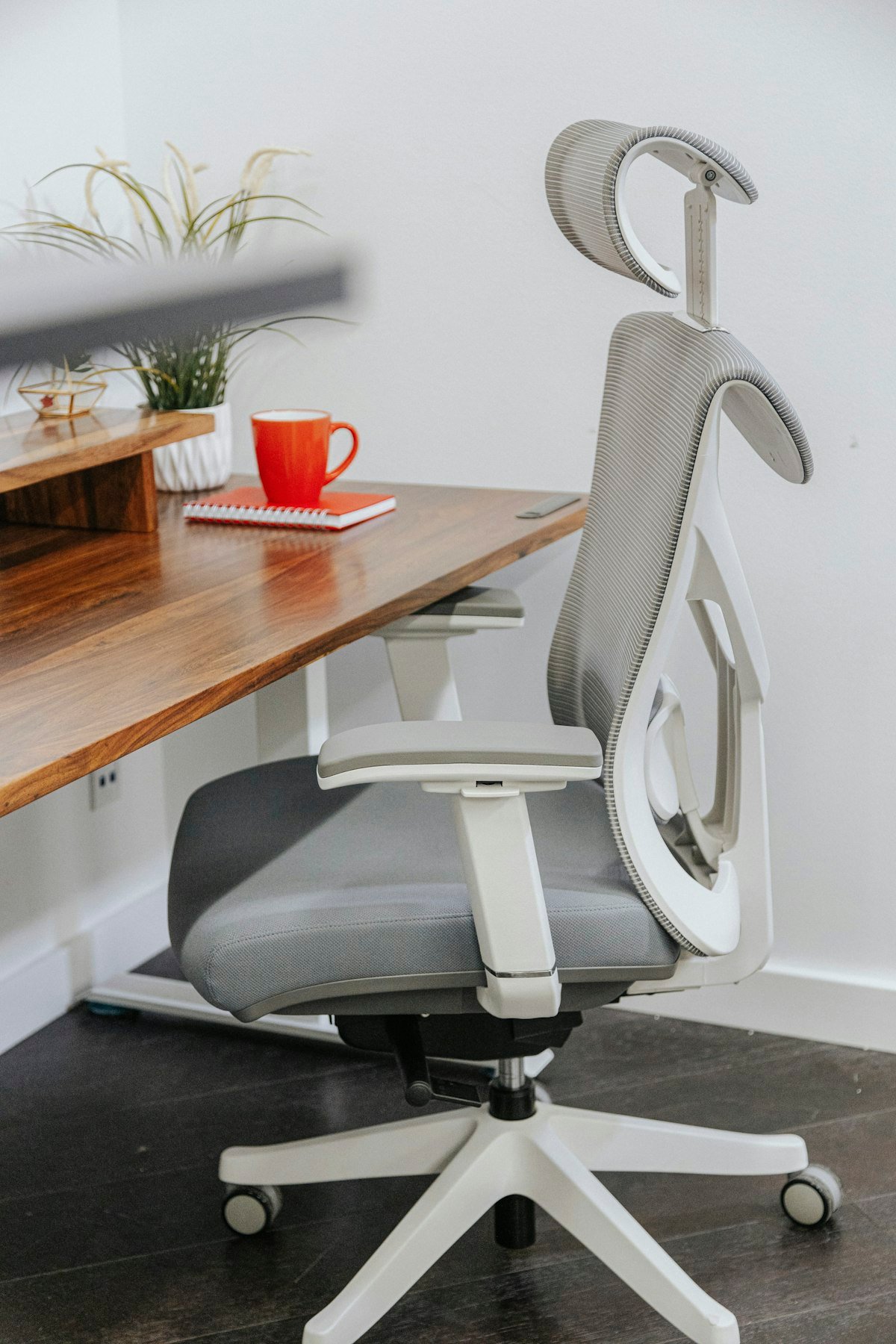
Chair: set so your feet are flat on the floor and your thighs are level, about a quarter of your height.
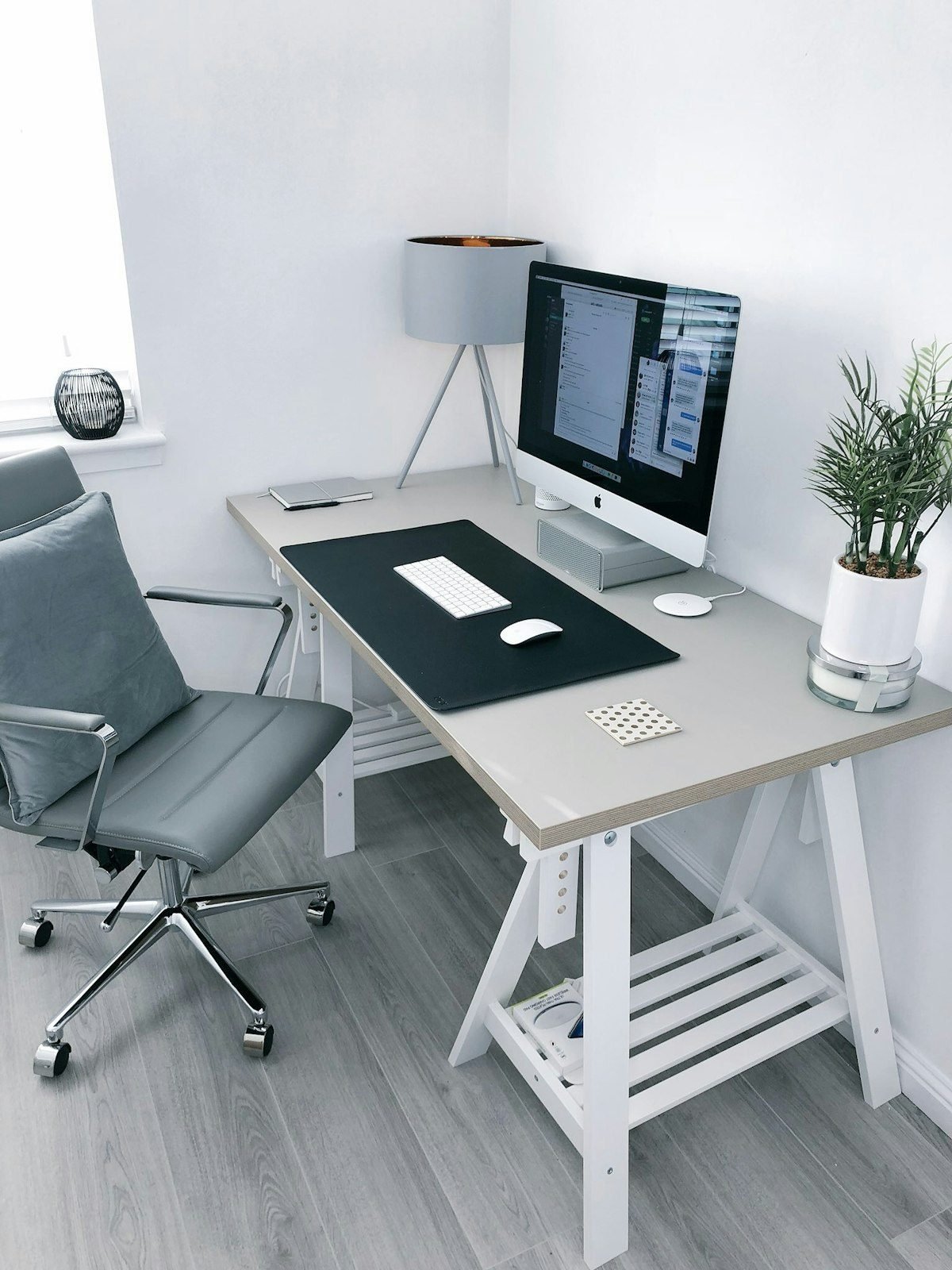
Sitting desk: just below your seated elbow height.
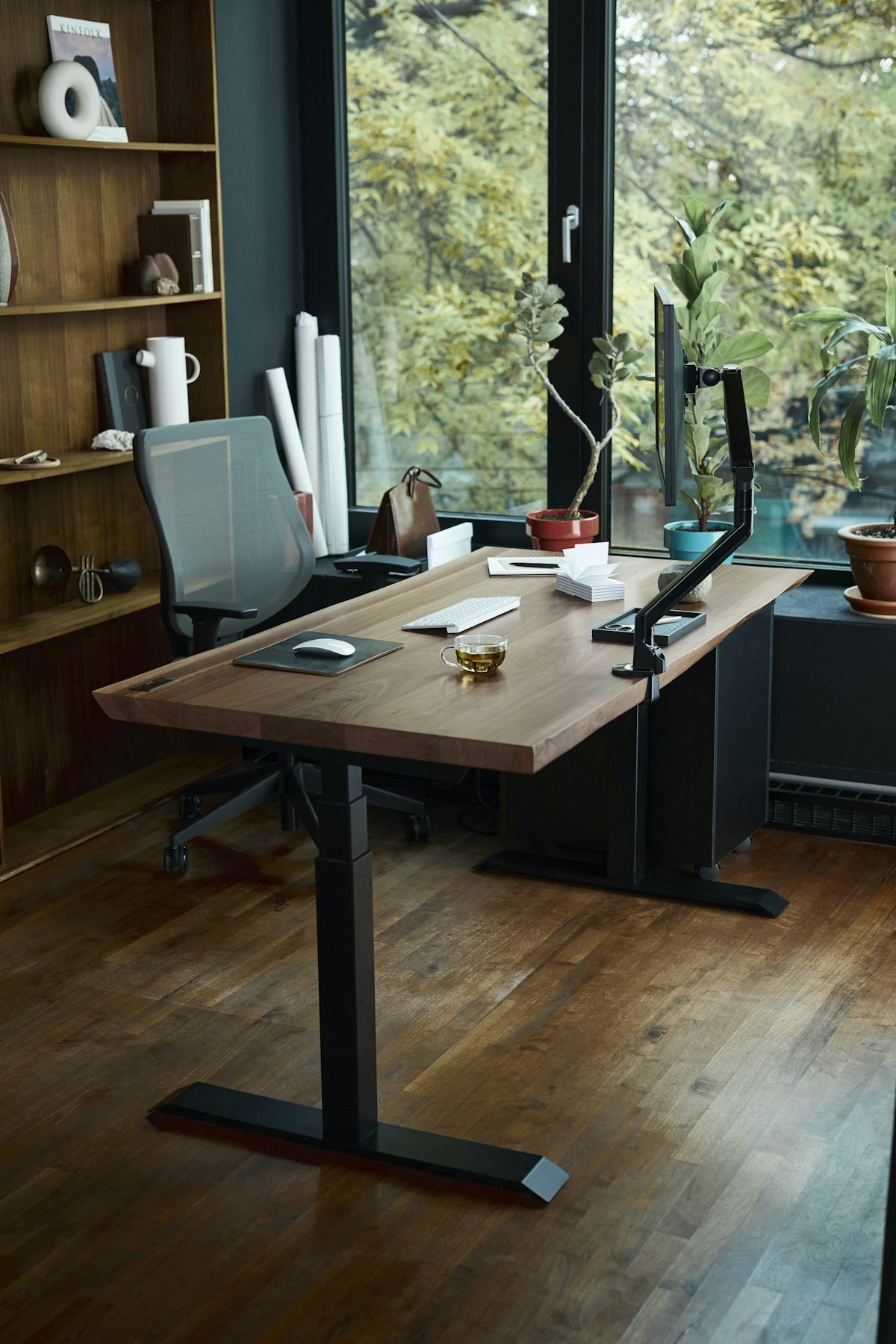
Standing desk: just below your standing elbow height.
Monitor: the top of the screen at eye level or slightly below, about an arm's length away.
Everyone's proportions are a little different, so treat the results as a starting point and adjust by an inch or two until it feels right.
Tips for a better result
Adjust, then live with it for a week
Set the desk and chair to the numbers here, work at them for a few days and then adjust by an inch or two. Small changes make a large difference to how your shoulders and wrists feel by the end of the day.
Chair first, then desk
Always set the chair first so your feet are flat and your thighs are level, then bring the desk to elbow height. If the desk is then too high to work at comfortably, raise the chair and use a footrest rather than lifting the desk.
Move through the day
The best position is the next one. Alternate between sitting and standing, and stand for a few minutes every half hour or so. A sit-stand desk makes that easy, but you can also stand at a counter for phone calls.
Screen height needs a laptop riser
A laptop screen is almost always too low if the keyboard is at the right height. A riser or stand, plus a separate keyboard and mouse, lets you set the screen and the keyboard each at the correct level.
Limitations of This Estimate
The ratios used here are based on average adult proportions. People with longer or shorter legs, arms or torsos for their height will need a slightly different setting, and the numbers are a starting point rather than a prescription.
If you have pain, a medical condition or specific accessibility needs, ask a physiotherapist or an occupational therapist for advice. This calculator is not medical advice.
Frequently Asked Questions
Set it so the surface is just below your elbows when your arms hang relaxed and bent at 90 degrees. In regular shoes, that's about 38.5 inches for someone 5'4", 42.5 inches for 5'10", and 45 inches for 6'2". Enter your height above for your exact number.
Set your chair so your feet rest flat on the floor and your thighs are level, with your knees at about 90 degrees. That's usually about a quarter of your height plus your shoe height: around 18.5 inches for someone 5'10". Most people fall between 16 and 21 inches.
Put the top of the screen at eye level or up to 2 inches below, so you look slightly down at the middle of the screen. Place it about an arm's length away, 20 to 30 inches from your eyes.
Standard fixed desks are 28 to 30 inches tall. That suits people around 6 feet tall best; most people under 5'10" find them slightly high, so they need a lower desk, a keyboard tray or a footrest. A height-adjustable desk solves this for any height.
Related Calculators
Furniture Fit Calculator
Check a desk will fit your room with space to pull out the chair and walk around.
Use the Furniture Fit Calculator